

Today in the Invistro review, we are talking about a Forex/CFD broker that is trying to convince traders of its fully legal operations and the provision of the most comfortable conditions, advanced technologies, and personalized support for every client. Users are promised more than 350 trading instruments, ultra-tight spreads, and fast and transparent money operations. In short, relying on its experience in the market, the company claims it is ready to make trading accessible to everyone and help achieve financial goals. However, scammers forgot to mention that the only financial goals that will be achieved are their own, as clients’ money will be directed toward them. And so that you can understand that this is exactly the case, we provide all the details about this fraudulent project below.
Invistro Quick Card
| Investigation Date | 16/07/2026 |
| Active Website | https://invistro.devawove.com/, https://invistro.io/ |
| Domain Age | Since 22/03/2026 |
| Brand Name | Invistro |
| Operating Entity | Invistro Ltd |
| Stated Jurisdiction | Mwali (Moheli), Comoros Union |
| Blacklist Status | Not found |
| License Status | Verified |
| License Number | MISA BFX2025112 |
| Office Address | Bonovo Road – Fomboni Island of Mohéli – Comoros Union |
| Phone Number | +442080978292 |
| Support Email | support@invistro.com |
| Quick Contacts | Live chat |
| Company Activities | Brokerage |
| Investing Terms | $250 |
| Risk Assessment | High risk |
Let’s Identify the Company’s Background
We practically encounter Forex/CFD brokers every day that claim official registration and operations under licenses, while in reality they do not possess the mentioned documents. No less often, we analyze scammers who display certificates from offshore registrars and regulators but have only one goal — to appropriate clients’ funds. Both categories pose a serious threat to traders. To avoid becoming victims, the latter must learn how to conduct a thorough analysis of the data about the platform they are interested in and the offers it provides. For now, in the invistro.io review, we will do this ourselves and find out whether another “fully regulated” company can be trusted.
Invistro Jurisdiction and Regulation
We started, of course, with the information provided by the broker on its official website. In the footer, it states that:
- The platform and website belong to Invistro LTD, a company registered on the autonomous island of Mwali (Moheli), Comoros Union.
- Brokerage activities are carried out under a license issued by the local financial regulator, Mwali International Services Authority (MISA).
Checking this information is not difficult, since the regulator’s register is publicly available. A search by the license number provided the following result.
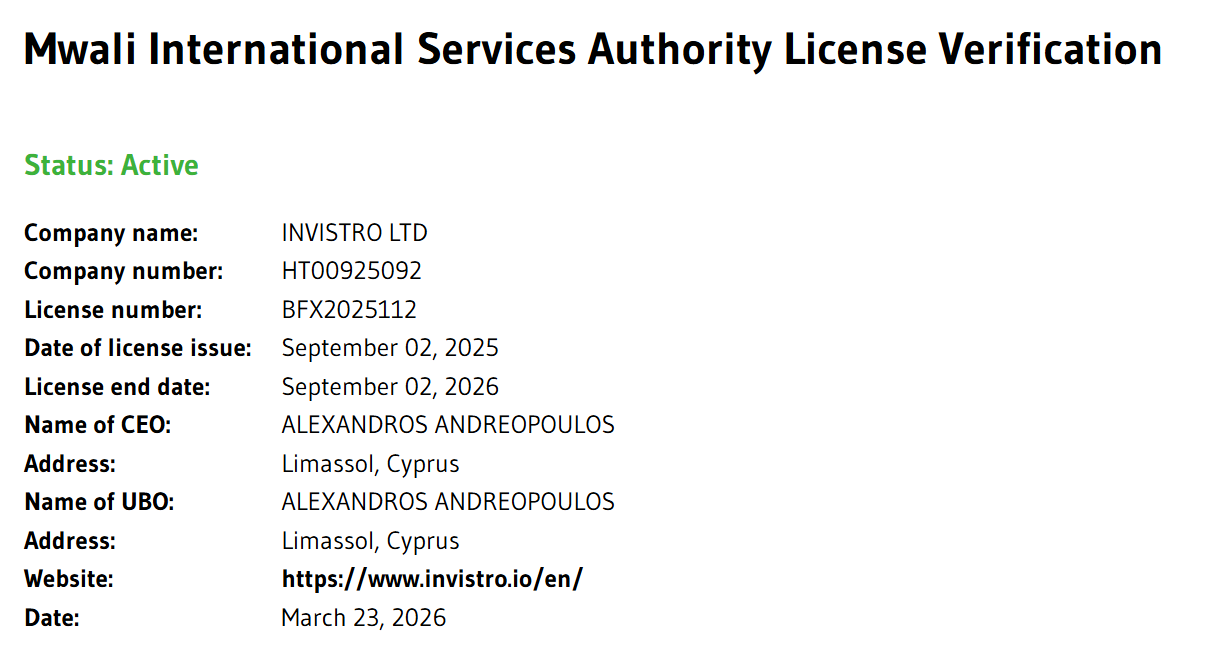
As we can see, Invistro LTD is indeed registered under number HT00925092 in September 2025 and received brokerage license number BFX2025112 on September 2, 2025. We should note that the MISA register contains information about the websites operated by license holders. These details also confirm that the platform belongs to this company.
Let’s start with the fact that the Comoros Union as a whole, as well as its autonomous islands such as Anjouan and Mwali (Moheli), are currently considered “grey” offshore jurisdictions. Can companies registered in jurisdictions that, quite literally, ignore international standards, decisions, and documents of institutions such as the FATF be trusted? Obviously not. This is also confirmed, for example, by major banks that refuse to work with companies registered locally. If such organizations consider doing business with these entities unsafe, can you really be sure that your money is secure with a broker registered in Mwali?
The issue of licenses is even more complicated. Autonomous islands with special status claim the right to conduct financial activities (which is the area we are interested in) regardless of the actions and laws of the sovereign state (Comoros Union). Based on this, their own regulators have been established on the islands, issuing licenses, including to banks and brokers.
The central authorities have a different view: they believe that autonomy does not mean complete independence, and that key issues should be decided by the Union’s authorities (this also applies to the issuance of banking and brokerage licenses).
Who obtains these unrecognized licenses? In most cases, they are business owners who have virtually no chance of legally obtaining licenses from more reputable regulators. At the same time, local authorities and MISA can register companies within 1–2 weeks and license their activities within 4–6 weeks. The cost of these services is also relatively low (up to €5,500 for a full package of documents, including €500–1,500 for registration). Moreover, the procedure itself is not particularly complicated and essentially consists of adding entries to official registers after the required payment has been made.
We believe you have already guessed that such services are highly popular among scammers or inexperienced brokers who have neither the resources nor the infrastructure to properly organize trading operations. At the same time, it is important to consider that the MISA practically does not use mechanisms designed to protect brokerage clients:
- It does not require funds to be stored in segregated accounts.
- It does not oblige companies to participate in compensation schemes or purchase Professional Indemnity Insurance policies.
- It does not conduct regular checks of brokers’ activities or the results of independent audits.
- It does not restrict trading conditions or deal parameters.
As a result, Mwali International Services Authority does not prevent fraudulent activity but effectively turns a blind eye to it in pursuit of increasing the number of payments made to the organization. In our view, this provides strong grounds not to consider an MISA license a full-fledged document issued by a responsible regulator. Among its license holders, there is a significant number of scam projects, many of which have already disappeared with traders’ deposits. The likelihood that Invistro will join their ranks is quite high.
Invistro.io History
On its About Us page, the broker does not say a single word about its history. We tried to find at least some information in other sections of the project’s official website, but all our efforts were unsuccessful. The creators of the platform clearly chose not to disclose facts that are important for traders. This is a fairly typical approach for firms operating under an MISA license. While this alone cannot be considered direct proof of fraud, it is certainly another negative point for Invistro.
Fortunately, it is not difficult to determine how long the broker has actually been operating online. For this, we only need to consult the information stored by WHOIS and the Internet Archive.
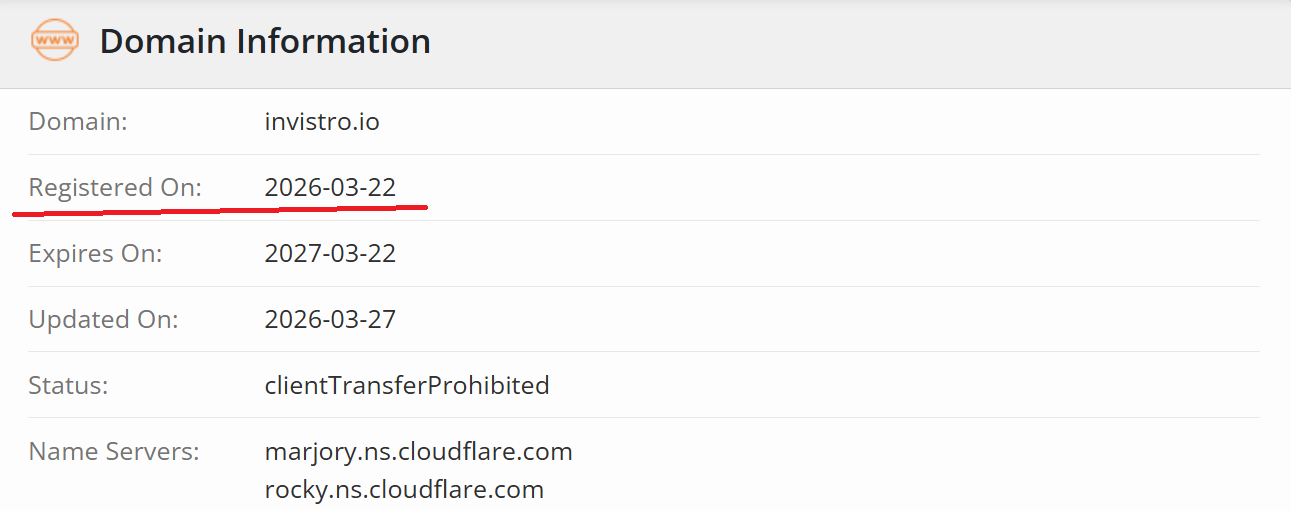
However, the .io domain is not the company’s only domain. Its email address uses invistro.com, which, according to WHOIS data, is significantly older, having been registered in July 2025. Nevertheless, snapshots from the Internet Archive show no activity on this domain during either 2025 or 2026, indicating that no operational version of the broker’s website was ever hosted there.
There is another noteworthy detail. An identical copy of the Invistro website can be found at https://invistro.devawove.com/. It is difficult to imagine a legitimate broker operating its main platform on a subdomain with such an obscure and unrelated name. Moreover, this domain is not mentioned anywhere in the regulator’s records. While it is possible that development work began there before the official launch, we believe it was most likely used only as a development environment.
This assumption is further supported by customer feedback. The first Invistro review on Trustpilot appeared only in May 2026, which aligns well with all the dates discussed above (with the exception of the registration date of the .com domain). This should be viewed as additional confirmation that the broker has only been active online for a very limited period. It is also worth noting that there are only eight reviews on the platform, all posted within the last two months — a respectable but far from impressive number.
The distribution of ratings is also rather unusual: 75% of the comments are neutral, while 25% are negative. However, reading the neutral reviews reveals an interesting pattern. They openly praise the broker but provide virtually no specific details to support their claims. We have encountered this tactic before with obvious scam projects: instead of posting five-star comments that might attract moderation, they commission overly positive reviews with a 3-out-of-5 rating to appear more natural.
Finally, it should be noted that experts from trading-focused websites also have a rather poor opinion of Invistro. Perhaps the only partial exception is WikiFX, where the broker received a near-neutral score of 4.58 out of 10. Even so, automated scoring systems are not immune to errors, and WikiFX itself warns traders about the high risks associated with using this platform.
Due Diligence: Onboarding & Funding
The creators of Invistro’s official website clearly did not spend much effort on its design. A white background, black headings, dark gray text, blue interface elements, and very few images create the impression of a website assembled in a hurry with minimal investment of time and resources. Perhaps this was intentional: a minimalist design with very little actual content. This style has long become a hallmark of many scam brokers that have no interest in investing additional effort or money into establishing a credible online presence.
From the very first step, new users are required to complete several consecutive forms across multiple screens, making the registration process unnecessarily cumbersome. Moreover, the amount of information requested goes far beyond what would normally be expected. In addition to standard personal details, applicants are even asked to provide their Tax Identification Number (TIN). At times, it feels as though the only things missing are an autobiography and a list of relatives going back several generations.
The requirement to provide a tax identification number is particularly unusual, since a brokerage company is generally not involved in a client’s relationship with tax authorities and has no objective need for such information. Furthermore, MISA — the regulator that issued Invistro’s license — does not impose detailed requirements regarding the scope of personal information collected during KYC procedures, making such extensive data collection appear questionable at best.
The next stage of registration raises even more questions. Users are asked to complete a detailed questionnaire disclosing their income sources, income level, expected investment amounts, trading experience, and various other financial details. This naturally raises the question: why does the company need such an extensive amount of information?
Perhaps the most interesting feature of the registration process is its selective availability. Users connecting from European IP addresses or using phone numbers issued by European mobile operators (as well as those from certain other jurisdictions) receive a notification stating that Invistro’s services are unavailable in their country. At first glance, this restriction appears reasonable. European legislation requires brokerage firms offering financial services to establish legal entities within the relevant jurisdictions and obtain licenses from local financial regulators.
However, further examination shows that this logic is applied inconsistently. Registration is available without difficulty to users from the Asia-Pacific region, the Middle East, Central Asia, and Latin America, although some applications may still be rejected based on geographic criteria. At the same time, WikiFX reports that the broker does have clients from Europe. Under these circumstances, it becomes nearly impossible to understand the principles by which the platform determines who may or may not register.
Even more confusing is the fact that some countries impose even stricter regulations. For example, in India, using the services of foreign brokers is generally prohibited and, under certain circumstances, may expose traders not only to administrative penalties but even to criminal liability. Nevertheless, Invistro does not appear to apply any systematic restrictions to Indian clients.
The broker’s funding procedures are no less concerning. In its FAQ section, the company states that clients can use bank transfers, debit and credit cards, as well as other payment methods. However, neither the website nor the client area provides the company’s own banking details for transferring funds. Instead, all transactions are routed through third-party payment intermediaries, many of which are little-known regional services, making it nearly impossible to identify the ultimate recipient of clients’ money. The broker also fails to disclose expected processing times or provide any guarantees that transferred funds will actually reach the trading account.
Invistro Conditions and Manipulations
Invistro is clearly in no hurry to disclose its trading conditions, just as it is reluctant to provide detailed information about non-trading operations. At least on the official website, a significant portion of the information that traders normally consider essential for evaluating trading conditions is missing. Everything a potential client can learn before opening an account is limited to just six pages: one general overview and five separate pages dedicated to each account type.

Invistro offers five account types:
- Three standard trading accounts: Silver, Gold, and Platinum.
- A VIP account aimed at high-net-worth clients.
- An Islamic (Swap-Free) account designed for traders who follow Sharia principles.
Let’s start with leverage. The Silver and Gold accounts offer leverage of up to 1:200, while Platinum increases this to 1:400. The leverage available for VIP clients is not disclosed at all — as if ordinary traders are not supposed to know what conditions wealthy clients receive. According to the published specifications, the Islamic account also provides leverage of up to 1:200.
These extremely high leverage ratios apply only to Forex currency pairs, although even here it is unclear whether this refers only to major pairs or also includes cross pairs. Leverage is lower for other asset classes, but this does little to change the overall picture. In any case, the offered ratios far exceed the limits considered appropriate for retail investors by Tier-1 regulators such as the UK’s FCA and Australia’s ASIC. For example, the European Securities and Markets Authority (ESMA) limits maximum leverage on major currency pairs to 1:30. ESMA also states that 75% to 85% of retail traders lose money within their first year, even under these much stricter leverage limits.
The situation with spreads is even less transparent. The broker claims that Gold and Platinum accounts receive 20% and 30% discounts respectively compared to the base Silver account. However, this is where the main problem becomes apparent: the website never discloses the actual base spread values. The only figure published is a minimum spread of 0.7 pips, which is advertised exclusively for the VIP account. At the same time, the size of the VIP discount is never explained. As a result, traders have no way to estimate their actual trading costs.
The same issue exists with swaps. Invistro states that higher-tier accounts receive discounted swap rates, yet it never publishes the original swap values from which those discounts are calculated. Consequently, it is impossible to verify whether the advertised benefits are genuine or even estimate the real cost of holding positions overnight.
To summarize, Invistro leaves most of the critical questions about its trading conditions unanswered. The offered leverage significantly increases risks for retail traders, actual trading costs cannot be calculated because the broker does not disclose its base spreads or swap rates, and many other essential trading parameters remain undisclosed altogether. Such a lack of transparency is highly unusual for brokers supervised by reputable financial regulators, but it is a pattern frequently observed among fraudulent trading platforms.
Invistro.io Withdrawal Integrity & Exit Process
The broker claims that it does not charge any fees for deposits. However, it provides no information whatsoever about withdrawal fees. The only details we were able to find are contained in the Withdrawal Policy (available on the Legal page). According to this document, the following conditions apply to withdrawals made via bank transfer:
- Withdrawal requests for amounts below $30 will not be processed.
- For withdrawals of up to $50, the company deducts $30, claiming that this amount represents the bank charges.
- No fees are specified for withdrawals above $50. However, we know for a fact that banks do not process transfers free of charge. Why does the company stop mentioning bank charges for larger withdrawals? We suspect that the previously mentioned $30 is not actually a bank fee at all.
Strengths & Weaknesses Analysis
-
The company's registration and the existence of its MISA license have been fully verified.
-
The broker does not impose maximum deposit limits on any account type, while the minimum deposit of $250 is not an excessive amount for most traders.
-
The MISA license under which the broker operates is recognized by virtually no reputable financial authority.
-
Trading conditions are only partially disclosed.
-
The website provides almost no information about non-trading conditions and fees.
-
During registration, clients are required to provide an excessive amount of personal information that the company has little practical need for.
-
The project's owners appear to commission overly positive reviews disguised as neutral ratings.
Investment Risk Summary
As demonstrated throughout this Invistro review, this is far from a transparent brokerage project. The company relies on offshore registration and a MISA license that cannot be considered equivalent to regulation by a reputable financial authority. It fails to fully disclose its trading and non-trading conditions while also benefiting from suspiciously positive online reviews. Does it deserve investors’ trust? In our opinion, like any platform displaying multiple signs of fraudulent behavior, the answer is clearly no.


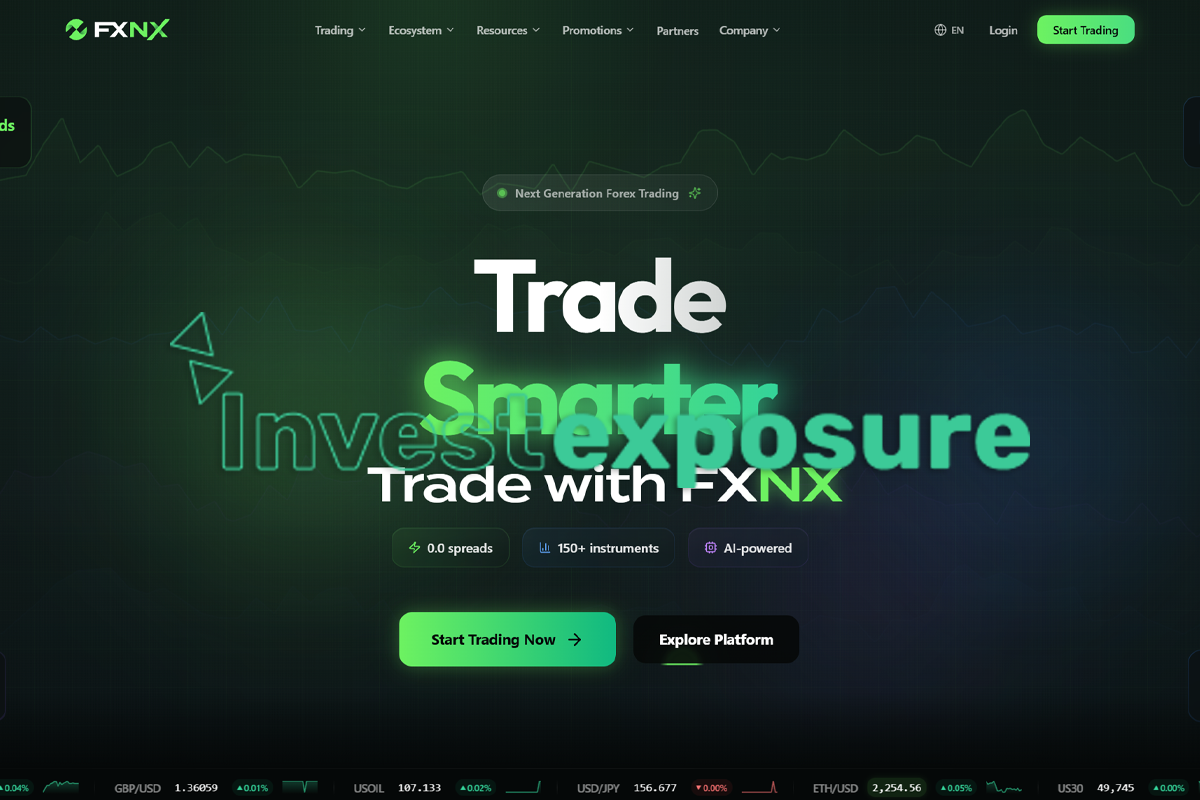
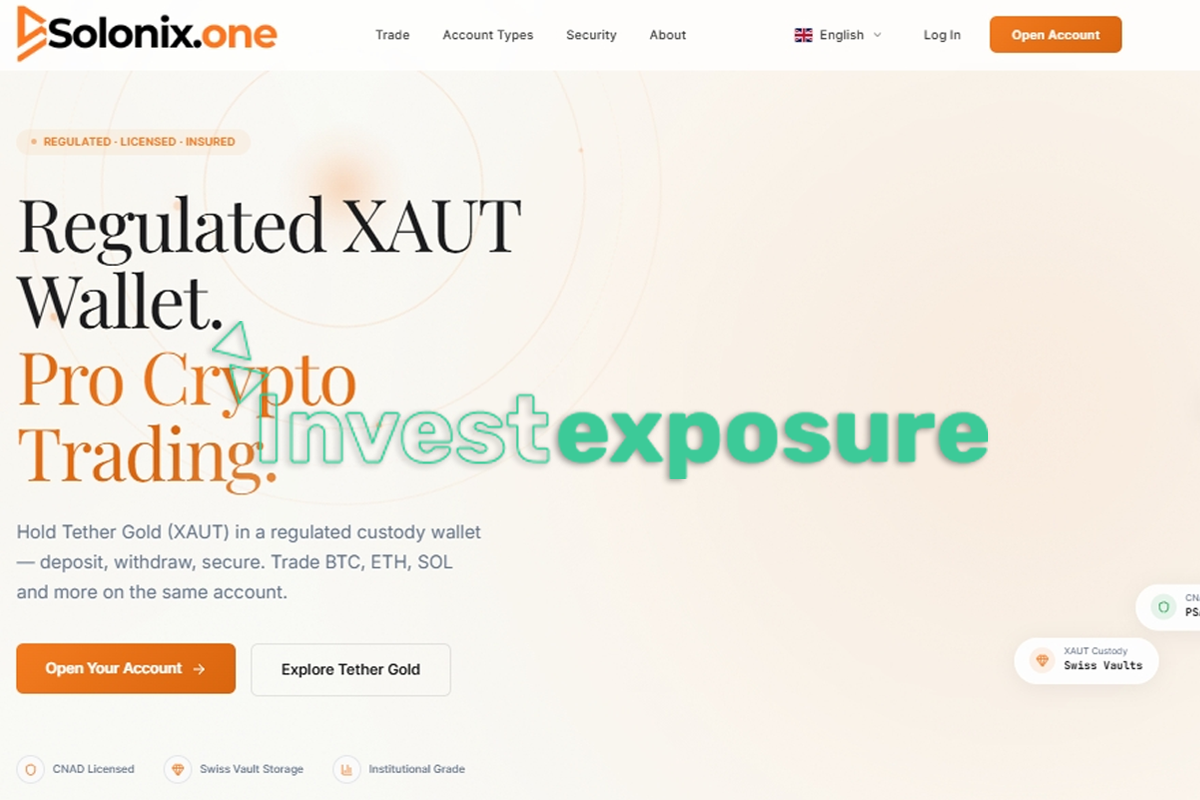

Invistro managers gave me fake trading advice, and after my deposit was wiped out, they simply disappeared! I was shocked by the way they treated clients and by the complete lack of guarantees. I still don’t understand how I ended up losing my money to these scammers. Do not trade with them under any circumstances!!